Rock mass fragmentation through blasting constitutes the first and most critical stage of the comminution process in mining and civil works, defined as the controlled reduction of in situ rock into smaller fragments through the application of explosive energy.
BLAST ENGINEERING S.A.C. offers specialized services in:
From the perspective of rock mechanics, the fragmentation process begins with the detonation of the explosive, generating a compressive shock wave that propagates radially from the blast hole. When this compressive wave encounters a free surface (bench face or tunnel roof), it is reflected as a tensile wave, generating tensile fractures that are primarily responsible for rock mass fragmentation.
The tensile strength of rock is approximately one-tenth of its compressive strength (Preece and Chung, 2003). This principle explains why bench blasting, which provides two free faces for wave reflection, is more efficient than confined blasting.
Strategic Importance in the Mining Value Chain
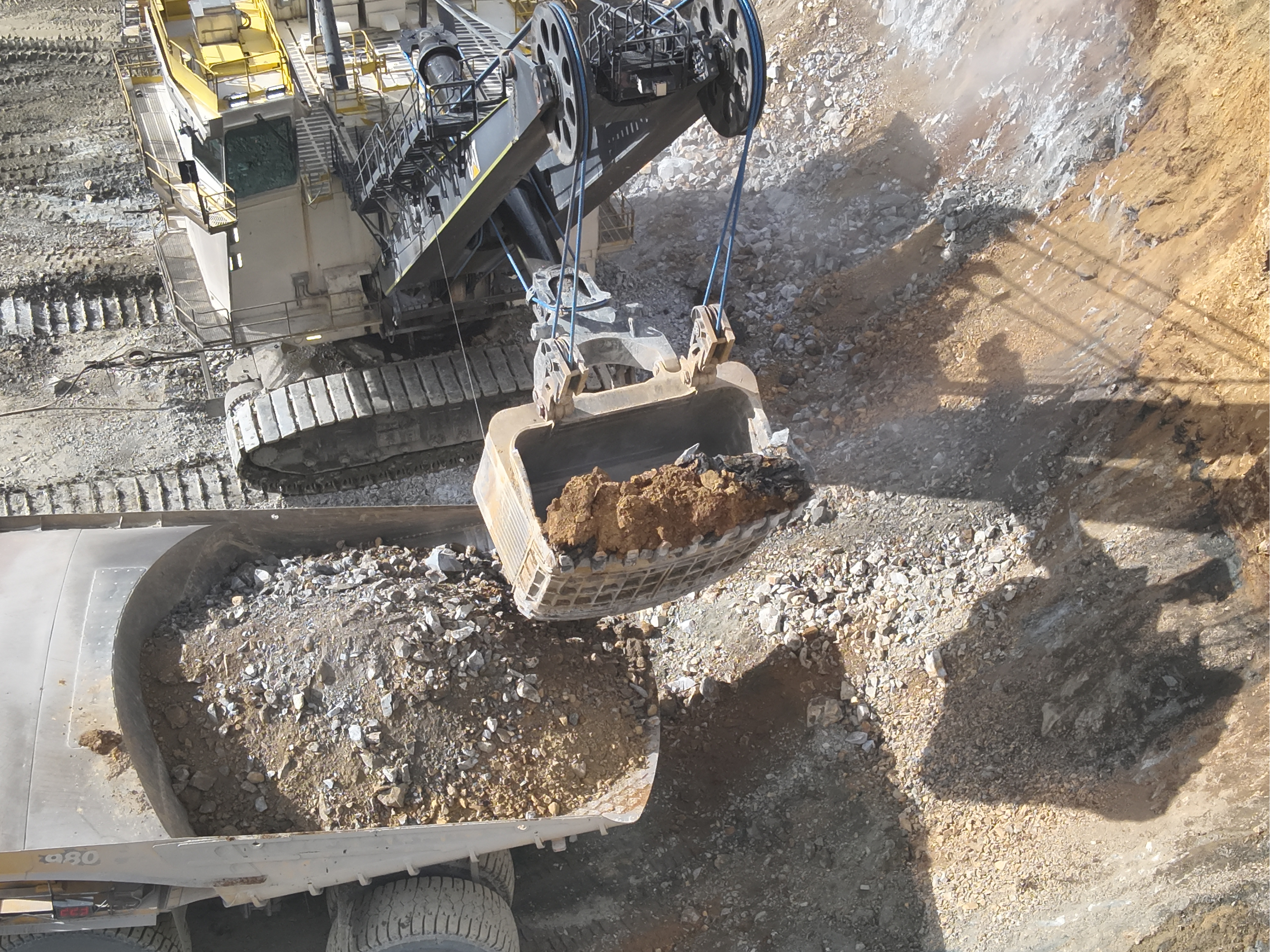
Blast-induced fragmentation has a decisive influence on the efficiency of the entire mining production chain, constituting the initial low-cost link that conditions the performance of subsequent loading, hauling, crushing and grinding stages. Several studies have documented that optimizing blast fragmentation can increase shovel and loader productivity, improve truck fill factors, reduce equipment wear and, fundamentally, decrease energy consumption in comminution circuits (Eloranta, 1999; Brent et al., 2013; Ziemski, 2011). In this context, it has been established that grinding consumes between 10 and 40 kWh per tonne of processed ore, representing the most significant portion of energy consumption in mining operations (Norgate and Hacque, 2010).
The Mine-to-Mill (M2M) approach has emerged as a fundamental paradigm for maximizing the economic value of mining operations by considering fragmentation as a continuous and integrated process extending from the rock mass to the processing plant, rather than as independent and isolated operations. The pioneering work of Nielsen (1984) and the Julius Kruttschnitt Mineral Research Centre (JKMRC) established the methodological foundations for this integration, demonstrating that operational efficiency and associated costs can be optimized by coordinating mining and processing stages. Subsequent investigations at mines such as Cadia Hill (Australia) and Porgera (Papua New Guinea) confirmed that increases in specific blasting energy can increase mill throughput by between 15% and 40%, depending on ore characteristics and comminution circuit design (Kanchibotla et al., 1998; Burger et al., 2006).
An additional aspect of great relevance is the phenomenon of blast-induced microfracturing, which reduces the inherent strength of fragments, improving their grindability. This effect, documented by Nielsen and Malvik (1999), Michaux and Djordjevic (2005), and Katsabanis and Kim (2011), manifests itself through the creation of internal microfractures that reduce the energy required for subsequent comminution. Microfracturing occurs preferentially at mineral-gangue interfaces due to differences in elastic-plastic properties, suggesting that high-intensity blasting could improve mineral liberation during processing stages (Brent et al., 2012).
Integration and Future Perspectives
Rock fragmentation through blasting is a field of study that integrates knowledge of rock mechanics, explosive dynamics, numerical modeling, artificial intelligence and process optimization. Successful implementation of the Mine-to-Mill approach requires significant investment in measurement and control technologies, as well as a cultural shift toward the integration of traditionally isolated disciplines.
Future perspectives point toward the development of autonomous blasting optimization systems that integrate MWD data, fragmentation images and process models in real time to dynamically adjust design parameters. Combining machine learning techniques with multi-objective optimization will make it possible to generate solutions adapted to the specific conditions of each operation, simultaneously considering costs, productivity, safety and environmental sustainability.
Integrating fragmentation into long-term mine planning, considering geological variability and operational constraints, will represent the next step in the evolution of the Mine-to-Mill approach toward a truly holistic optimization of the mining value chain.